
UK Greyhound Tracks Guide & GBGB Stadium Analysis
Best Greyhound Betting Sites – Bet on Greyhounds in 2026
 Available in US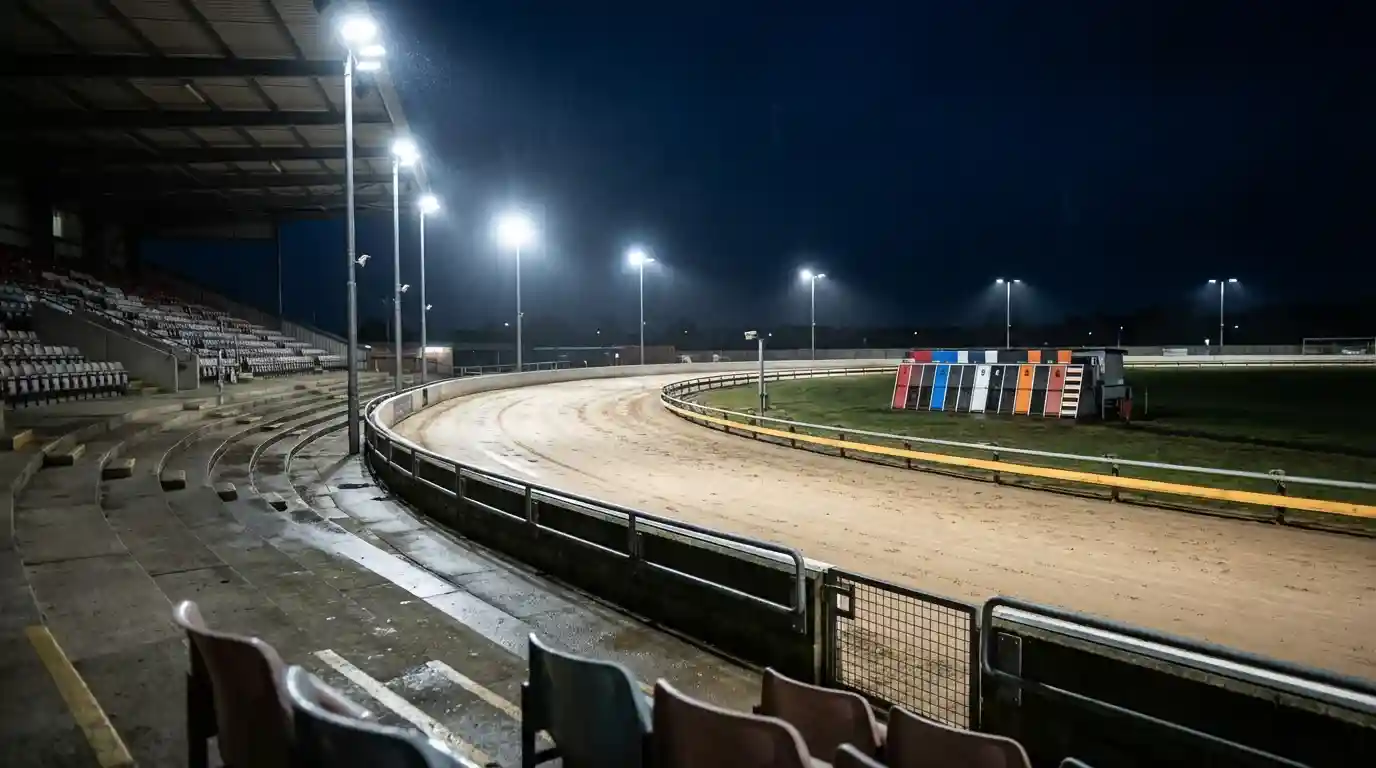
Venue Profiles: Characteristics of UK GBGB Stadiums
A dog’s form at Romford tells you almost nothing about how it’ll run at Towcester — and that’s your edge. UK greyhound racing operates across a network of GBGB-licensed stadiums (GBGB — Racecourses), each with its own dimensions, surface characteristics, distances, and trap biases. A dog can look like a world-beater on a tight track where early pace and the inside rail dominate, then travel fifty miles to a wide, galloping circuit and finish out of the places. The track changes the race as much as the dogs do.
This isn’t a quirk; it’s a fundamental feature of the sport. Unlike horse racing, where the Jockey Club standardises certain conditions, greyhound tracks were built independently over decades, in whatever footprint the local site allowed. Some are compact ovals squeezed into football grounds. Others are purpose-built stadiums with generous bends and long straights. The variation means that form is never truly portable. A calculated time at Sunderland and a calculated time at Hove are measuring different things, even if the numbers look similar.
For the bettor, this creates opportunity. Most casual punters treat all tracks interchangeably, backing a dog because it won last time without checking whether that win came at a venue with comparable characteristics. The punter who understands how each track shapes the race — which traps benefit, which running styles are rewarded, how the bends affect pace — holds a quiet but consistent advantage. This guide maps out the UK’s greyhound stadiums region by region, starting with the common architecture that every venue shares.
Keep in mind that the layout is just one factor; you also need to check the greyhound track conditions before placing a bet.
Anatomy of a Greyhound Track
Every track is an oval, but the dimensions, surfaces and camber vary enough to change race outcomes entirely. The basic structure is the same everywhere: a sand surface (all GBGB tracks now race on sand rather than grass or dirt), an inside hare rail that guides the mechanical lure around the circuit, six starting traps, and either three or four bends depending on the distance. But within that template, the specifics differ enormously.
Track circumference determines how tight or generous the bends are. A short circumference — common at older urban stadiums — means sharper turns, which favour dogs that rail tightly and punish wide runners who get swung outward by centrifugal force. A longer circumference means gentler bends, more room to manoeuvre, and a fairer race for all running styles. The width of the track matters too. Narrow tracks compress the field and produce more interference at the bends. Wide tracks give dogs room to find their running line, which generally benefits middle-trackers and wide runners.
Distances at UK greyhound tracks follow loose bands rather than strict standards. Sprint distances range from 240 to 285 metres, standard trips from roughly 400 to 500 metres, and staying races from 600 metres upward, with a few venues offering marathon distances beyond 800 metres. The exact distances are track-specific: Romford’s sprint is 400 metres (short for a sprint at some venues, but standard there), while Towcester’s standard trip is 480 metres. These differences mean that comparing times across tracks without understanding the distance context is a trap in itself.
The running surface is sand at every licensed venue, but the sand composition, depth, drainage characteristics, and maintenance regime differ. Some tracks ride fast and firm in dry weather but become heavy after rain because the drainage is poor. Others remain consistent regardless of conditions because the substrate was engineered for that purpose. Going readings — the official assessment of how the surface is running on a given night — are published before each meeting, but they don’t capture the full picture. The going can vary from the first race to the last as the surface is churned up by successive fields, and localised patches of the track can ride differently from the measured standard.
Watering and rolling are part of the routine. Tracks are watered to maintain consistency and rolled to smooth the surface between meetings. The frequency and timing of these interventions affect how the track rides, and seasoned track-watchers can often tell from early race times whether tonight’s surface is running faster or slower than the official going suggests. This is the kind of marginal information that the track specialist accumulates over time and the casual bettor misses entirely.
London & South East Tracks
Romford on a Friday night is the beating heart of London greyhound racing. The Essex stadium is one of the busiest tracks in the country, running multiple meetings per week and producing some of the most competitive BAGS cards outside of the major open-race nights. The track is tight — the bends are sharp and the circumference is a compact 350 metres — which makes it a paradise for railers and a graveyard for wide runners. Trap 1 has a historical advantage at Romford that shows up consistently in the data: the inside box gets to the first bend faster with less interference, and on tight bends that positional advantage is amplified. Standard races over 400 metres are the bread and butter here, and early pace is king. A dog without a fast break is fighting the geometry of the track before the race even begins.
Crayford, which closed in January 2025 after 38 years of operation (Gambling Insider — Entain Announces Closure of Crayford), was considered one of the fairer venues in the South East, with slightly more generous bends and a range of distances that included both sprint and staying trips. Trap bias was less pronounced than at Romford, making it a track where form rather than draw tended to prevail. Stayers did well at Crayford — the 714-metre distance was a genuine test of stamina, and dogs with the fitness to sustain their pace around four bends were rewarded. Its closure concentrated the local dog population into remaining southern venues, particularly Romford and Hove, and removed an important fixture from the BAGS programme.
Sittingbourne in Kent runs regular BAGS cards and attracts a solid standard of runner. The track is middling in size — not as tight as Romford, not as fair as Crayford — and its trap bias data shows modest advantages for the lower traps without the dramatic skew you see at tighter circuits. Central Park, the venue’s home, also hosts evening meetings that draw a different crowd and sometimes a different quality of dog. It’s a workmanlike track that rewards consistent form reading rather than any single specialist angle.
Midlands Tracks
Monmore punches above its weight — consistently one of the most competitive cards in the country. The Wolverhampton venue runs frequent meetings and benefits from a strong pool of local trainers whose dogs are well suited to the track. Monmore offers a range of distances and produces balanced racing where no single trap dominates excessively, though the inside traps hold a slight edge over sprint distances as they do at most venues. The A-grade structure at Monmore goes deep, meaning you’ll find competitive races from A1 through to A7 and beyond. For bettors, the depth of grading creates genuine class-drop opportunities — dogs shifting between grades at a well-populated track are more likely to encounter form mismatches that the market misprices.
Perry Barr in Birmingham had a long reputation as a stayers’ track before closing in 2025, with operations relocating to the new Dunstall Park Greyhound Stadium in Wolverhampton, which opened in September 2025 (GBGB — 2025 Championship Dates). Perry Barr’s 500-metre standard trip was slightly longer than at some venues, and the track’s dimensions suited dogs with stamina rather than pure early speed. The bends were roomy enough to give wide runners a fighting chance, and races over the staying distances regularly produced results that confounded the sprinter-biased bettor. Dunstall Park inherits much of Perry Barr’s dog population and is expected to continue the Midlands stayers’ tradition.
Nottingham’s Colwick Park venue demands respect. It hosts several prestigious open races throughout the year and the quality of dog there on big nights is among the best in the country. The track is demanding — the bends are sweeping but the straights ask questions of a dog’s finishing speed. Nottingham is an ARC (Arena Racing Company) venue, which means it receives strong media coverage and its races feature on the RPGTV broadcast schedule. For betting purposes, the open-race nights at Nottingham reward serious form study. The standard BAGS cards are competitive too, and the track’s going can be variable depending on the time of year, adding another layer for the specialist to exploit.
Hall Green in Birmingham, once one of the great Midlands tracks, closed its doors and is worth mentioning for historical context. Its closure in July 2017 (ITV News — End of an Era for Hall Green) concentrated the local dog population into neighbouring venues, notably Perry Barr and Monmore, which deepened the pools at both tracks. If you encounter older form references to Hall Green, treat them as you would any defunct venue — interesting but irrelevant for current betting.
Northern Tracks
The North’s dog tracks don’t get the TV coverage, but the betting opportunities are just as rich. Newcastle, operating at Byker, is the big track of the region — physically large with generous bends and a galloping character that favours dogs with length of stride rather than tight-railing specialists. Wide runners fare better here than at compact southern venues, and the 480-metre standard trip is a genuine test of ability. Newcastle hosts open-race events and attracts quality dogs from across the North, making its feature nights some of the best betting propositions outside of London and the South.
Sunderland is Newcastle’s sharp-edged counterpart. The track is tight, fast, and unforgiving to dogs that run wide or break slowly. Early pace is essential — if you’re not near the front by the first bend at Sunderland, the compressed bends make it almost impossible to recover. Inside traps carry a measurable statistical advantage, and the sprint races over the shortest trips are often won by the dog that pings the lids and takes the bend first. For the bettor, Sunderland is a split-time paradise. The dog with the fastest sectional time from the right trap is a high-probability selection, and the form analysis is often simpler here than at bigger, more complex circuits.
Sheffield’s Owlerton Stadium is a demanding track with a reputation for testing dogs’ courage around the bends. The circuit is neither especially tight nor especially wide, but the camber and surface seem to produce more competitive finishes than the bare statistics would predict. Dogs need to be robust to handle Sheffield consistently, and fragile animals that falter under pressure tend to be found out. Doncaster and Kinsley serve the Yorkshire circuit with regular BAGS meetings, offering solid mid-tier racing where the form data is plentiful and the markets are liquid enough for most bet types.
The Northern tracks collectively present an opportunity for the specialist bettor who’s willing to look beyond the headline venues. The markets on northern BAGS racing are thinner than on southern meetings, which means pricing inefficiencies are more common. A dedicated watcher of Sunderland or Newcastle who builds their knowledge over months will encounter value that simply doesn’t exist in the better-scrutinised southern markets.
South & South West Tracks
Hove is where reputations are made — ask any trainer with a Derby contender. The Brighton-based stadium is widely considered one of the premier greyhound venues in the UK, with a track that tests every aspect of a dog’s ability: early pace, bend negotiation, and stamina. Hove’s open-race programme is among the strongest in the country, and its graded cards benefit from a deep pool of high-quality dogs based in the South. The track dimensions are generous without being sprawling, and the racing tends to be fair across all traps, though the inside boxes maintain a slight statistical edge at sprint distances.
For bettors, Hove is a form-reader’s track. The quality of the fields means that genuine class differences emerge more clearly than at lower-tier venues, and dogs that have proven themselves in open company at Hove carry a credential that translates well to other tracks. The feature nights attract significant market interest, which tightens the odds but also produces well-formed markets where the prices are more likely to be efficient. Finding value at Hove requires sharper analysis than at a BAGS meeting at a minor track — the crowd wisdom is better, so your edge needs to be stronger.
Swindon, which raced at the Blunsdon Abbey Stadium, closed at the end of 2025 and served the West Country circuit during its years of operation. The track was of moderate size with a reasonable mix of distances. It lacked the prestige of Hove but offered honest racing and consistent going. Its closure further reduced the number of venues in the South and West, concentrating the remaining dog population into neighbouring tracks.
Towcester: Home of the Derby
Towcester was built for the Derby — everything about its dimensions rewards quality over luck. The Northamptonshire venue is the only purpose-built greyhound stadium of its generation in the UK, designed from the ground up to host the sport’s most prestigious event, the English Greyhound Derby (Towcester Racecourse — Derby Dossier). The track is wide, the bends are generous, and the 480-metre standard trip is a proper examination of a dog’s racing ability. There are no tight corners to bail out a one-dimensional railer and no short straights where a front-runner can coast unchallenged. Towcester demands the full package: pace, stamina, tactical intelligence, and the physical robustness to sustain speed over a testing circuit.
The track’s wide profile means that running style matters less here than at tighter venues. A wide runner that would struggle at Romford can thrive at Towcester because there’s room to run without scrubbing against the pack at the bends. Middle-trackers often do well for the same reason. The trap draw is still relevant — the inside still offers a shorter path to the first bend — but the gap between the best and worst draw is narrower than at compact tracks. What matters most at Towcester is the quality of the dog. In Derby finals and other feature races, the class animals tend to rise to the top because the track doesn’t artificially favour any particular style.
For the regular bettor, Towcester’s BAGS cards offer a different challenge from the track’s marquee nights. The standard-grade racing at the venue attracts dogs from across the Midlands and South, and because the track’s characteristics are unusual, form from other venues doesn’t always translate accurately. A dog that posted sharp times at Romford may find Towcester’s wider bends disorienting. Equally, a dog that has struggled at tighter tracks can improve markedly when given room to gallop. If you’re betting at Towcester, prioritise course form — dogs that have run well at the venue previously are far more reliable than those making their debut on the track, regardless of how impressive their away form looks.
How Track Knowledge Improves Your Betting
You don’t learn a track from a guide — you learn it from watching 200 races there. This article gives you the map, but the territory is something you have to walk yourself. That said, there are practical steps that accelerate the process and turn general awareness into specific, bankable knowledge.
Start with results analysis. Most form databases and the GBGB’s own records publish historical results by venue. Pull up the last three months of results at your chosen track and run the numbers: what percentage of races were won by each trap? Is there a consistent inside bias, or does the data show a balanced distribution? How often does the first-bend leader win? What’s the average winning time over the standard distance, and how does it fluctuate with the going? These questions have quantified answers, and the data is freely available.
Then watch the racing. Streaming is available through most major bookmakers on BAGS meetings, and RPGTV covers selected evening cards. Watching races at your target track teaches you things the data alone can’t: how dogs negotiate the bends, where the congestion points are, whether certain traps seem to produce crowding at the first turn, and how the surface changes through a meeting. After fifty races watched with attention, you’ll start recognising patterns. After two hundred, those patterns become instinctive.
Track-specific trap statistics are your most immediate betting tool. If trap 1 wins 22% of races at a particular venue against a random expectation of 17%, that 5-percentage-point gap is a real and exploitable edge — not on every race, but across a season of betting. Combine a trap bias with form analysis (the best dog is also drawn in the favoured trap) and the convergence of factors produces your strongest bets. Without track knowledge, you’d miss the bias entirely and treat every trap as equal, which leaves value uncaptured.
A Punter’s Track Diary: Notes Worth Keeping
The best track guide isn’t on any website — it’s the one you build yourself, race by race. A greyhound track is a living thing. The surface changes with the seasons, the going shifts with the weather, and trap biases drift as the sand is re-laid, the rails are adjusted, and the running surface wears unevenly over months of racing. A bias that held strong in January may soften by April and reverse by July. No static guide, this one included, can keep pace with those shifts in real time.
What keeps pace is your own track diary. It doesn’t need to be elaborate — a simple spreadsheet or even a notebook works. After each meeting at your specialist tracks, record the going, note any trap-win patterns that stood out, flag any results that surprised you, and write a one-line observation about how the track seemed to be riding. Was the first bend causing problems for inside runners tonight? Did the going seem heavier than the official reading suggested? Were the times notably fast or slow across the card?
Over weeks and months, these observations aggregate into something no form database provides: a real-time picture of how your track is behaving right now. When you sit down to study tomorrow’s card, your diary gives you context that other bettors lack. You know that trap 5 has won four of the last twelve races at the track, up from a seasonal average of two. You know that the going was slow on Tuesday despite an official reading of normal. You know that a particular trainer has sent three winners in the last fortnight, all from the same kennel, all stepping down in grade.
This is the information asymmetry that profitable greyhound betting depends on. Not secrets, not inside knowledge, but accumulated, structured observation that the broader market doesn’t have the patience to compile. The tracks are there for everyone to see. The difference is who’s actually watching, and who’s writing it down.
Get the latest insights and track statistics from our top greyhound racing tips homepage.
