
Greyhound Weight & Season Form Factors
Best Greyhound Betting Sites – Bet on Greyhounds in 2026
 Available in US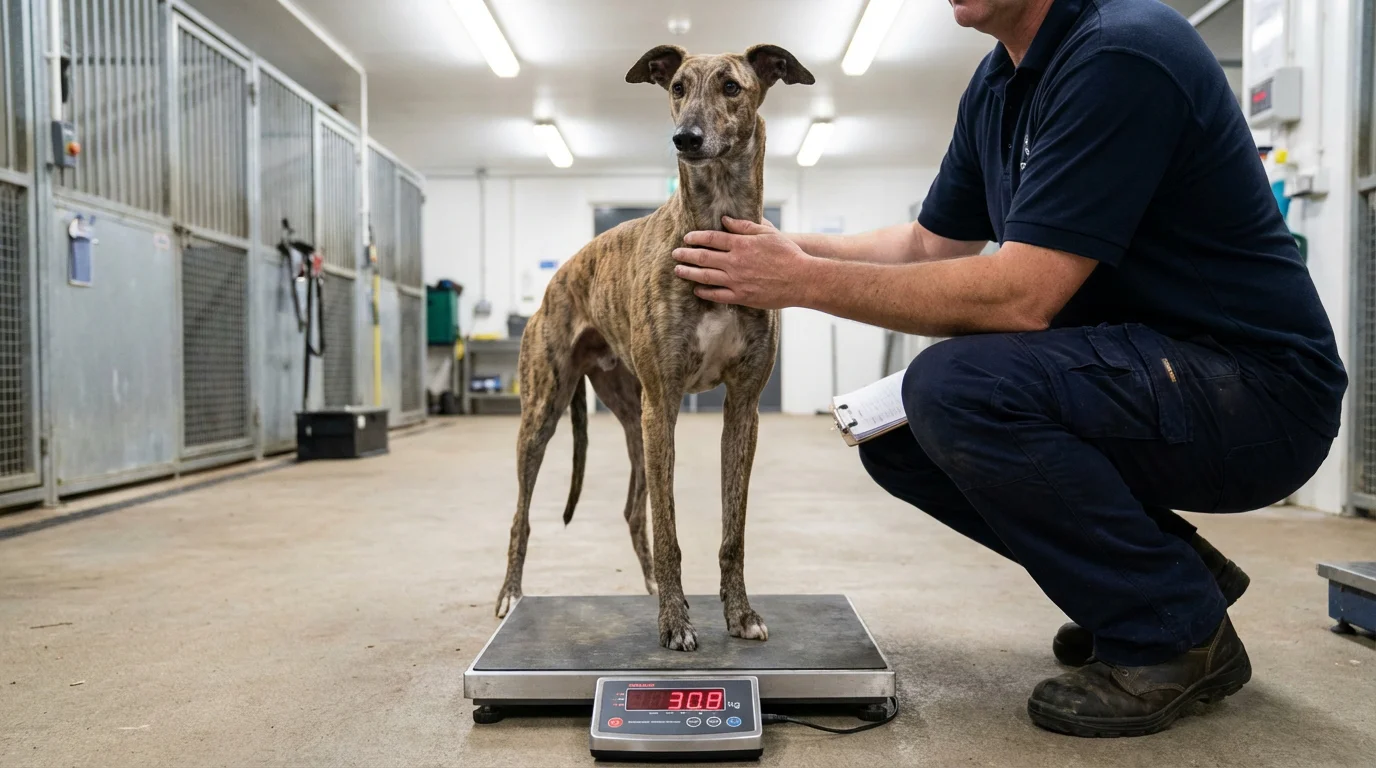
Weight Metrics: Evaluating Fitness and Season Factors
Weight and season are two of the most underused form factors in greyhound betting. The racecard shows the dog’s weight in plain sight. The form book records when a bitch has been absent for a season. Both pieces of information are publicly available, easily accessible, and routinely ignored by the majority of punters — which makes them exactly the kind of data that creates betting edges for those who pay attention.
Weight tells you about a dog’s physical condition: whether it is racing at its optimal mass, whether it has gained or lost weight since its last run, and whether the trend suggests improving fitness or declining form. Season — the reproductive cycle experienced by female greyhounds — creates a predictable absence followed by a return to racing that often produces a measurable change in performance. Both factors sit outside the standard form analysis of times, traps, and finishing positions, and both can provide the marginal advantage that separates a good selection from a missed opportunity.
This guide explains the one-kilogram rule, how to interpret weight trends, what bitch seasons mean for form, and how to build these factors into your broader selection process.
The One-Kilogram Rule and What It Means
Every greyhound is weighed before racing, and the weight is published on the racecard. The one-kilogram rule is the regulatory mechanism that uses this data: if a dog’s race-day weight varies by more than one kilogram from its last recorded racing weight, it must be withdrawn from the race. This rule exists to protect both the dog’s welfare and the betting public — a significant weight change can indicate illness, injury, or a change in condition that would affect performance.
The rule creates a hard boundary but does not address changes within the one-kilogram range. A dog can gain or lose up to 0.9 kilograms between races without triggering a withdrawal, and these sub-threshold changes carry information that the attentive punter can use. A dog racing at 30.5 kilograms today that raced at 31.3 last week has lost nearly a kilogram — close to the withdrawal threshold — and that drop may indicate a change in condition that the market has not priced in.
Weight increases and decreases have different implications depending on their magnitude and the context. A small increase of 0.2 to 0.3 kilograms is generally neutral and may reflect nothing more than a good meal or minor hydration variation. A larger increase of 0.5 kilograms or more can indicate that the dog is carrying extra condition — perhaps it has not been training as hard, or perhaps it has been resting between races. Dogs carrying excess weight typically show reduced acceleration and may fade in the closing stages of a race.
A small weight decrease of 0.2 to 0.3 kilograms is similarly neutral. A larger decrease can indicate that the dog has been training hard, is at peak fitness, or is being prepared specifically for this race. However, a significant decrease can also indicate illness or stress, particularly if it is accompanied by a poor recent run. The weight figure alone does not tell the whole story — it needs to be interpreted alongside the dog’s recent form and the trainer’s pattern of preparation.
The practical check is simple: before assessing any dog, compare today’s weight to the weight recorded at its last three or four races. Is it stable, trending upward, or trending downward? If stable, move on — weight is not a factor. If trending, consider why, and adjust your assessment accordingly. This takes 30 seconds per dog and is a step that most punters skip entirely.
Weight Trends and What They Signal
Individual weight readings are noisy. A single weigh-in can be affected by feeding timing, hydration, and even the time of day. Weight trends — the direction of change across multiple readings — are far more informative because they smooth out the noise and reveal the underlying trajectory of the dog’s condition.
A gradual downward trend in weight over three or four races, combined with improving form, is a positive signal. It suggests the dog is getting fitter, training harder, and being prepared to peak. This is the classic pattern of a dog on the upgrade — one that the trainer is conditioning towards a specific target or that is simply maturing into better physical shape. The market often underprices these dogs because the form figures lag the physical improvement: the weight trend tells you the dog is getting fitter before the race results confirm it.
A gradual upward trend in weight over several races, accompanied by declining form, is the opposite signal. It suggests the dog is losing fitness, possibly over-raced, possibly dealing with a minor issue that has not yet resulted in withdrawal. These dogs are often overpriced because their previous good form creates an expectation that the market has not yet adjusted downward. The weight trend, visible on the racecard, tells the story before the form figures catch up.
Stable weight over a long sequence of races is the hallmark of a well-managed dog in consistent training. These dogs are typically reliable performers whose form figures accurately reflect their ability. There is no hidden edge in the weight data for these dogs — their weight is not telling you anything their form is not already showing.
Bitch Seasons: The Predictable Absence and What Follows
Female greyhounds — bitches — experience a reproductive cycle known as a season, typically occurring every six to eight months. During a season, the bitch is withdrawn from racing for a period of approximately eight to twelve weeks. This absence is noted in the form book and is publicly available information, though it is not always prominently displayed on the racecard.
The significance of a bitch season for betting is not the absence itself but the return. When a bitch comes back from a season, her form trajectory often follows a predictable pattern that creates genuine betting value. In many cases, bitches return from a season in improved form — running faster, showing more energy, and performing above the level they showed before the break. This post-season improvement is well documented within the sport and is attributed to the hormonal and physical reset that the season provides.
The improvement is not universal. Some bitches return from a season at the same level as before, and a minority come back below their pre-season form. But the overall tendency towards improvement is strong enough to constitute a reliable form factor, and the market does not always price it in. A bitch returning from a season with modest pre-season form may be available at longer odds than her true post-season ability warrants, because the market is pricing her based on her old form rather than the improvement that frequently accompanies the return.
The first run back from a season is the most uncertain. Some trainers use the first outing as a fitness run, expecting the bitch to need the experience before hitting full form. Others prepare their bitches to perform on the first run back, and these dogs can produce surprise results at generous prices. Knowing the trainer’s pattern with returning bitches — which trainers produce sharp first-run performers and which need two or three runs — is a specific piece of intelligence that gives you an edge the general market does not have.
Tracking bitch seasons requires minimal effort. Note the dates when bitches in your tracked kennels are withdrawn for a season, and flag their return date. When they reappear on the racecard, check the trainer’s record with post-season returns and assess whether the market has adjusted for the likely improvement. This process takes a few minutes per week and produces actionable information on a regular basis.
Hidden Angles: Combining Weight and Season Data
Weight and season data are most powerful when combined with standard form analysis rather than used in isolation. A bitch returning from a season at a weight half a kilogram lighter than her pre-season average, showing a positive weight trend, and trained by a kennel with a strong record of post-season returns is a candidate backed by multiple converging signals. Each signal on its own is modest; together, they build a case that the market is unlikely to have fully priced.
Weight can also contextualise other form factors. A dog that disappointed at its last run — finished fourth when expected to win — might look like a form reversal. But if the weight was half a kilogram above its previous average, the disappointing run has an explanation that the finishing position alone does not provide. The dog was not in peak condition. If today’s weight is back to normal, the disappointing run can be discounted, and the dog assessed on the basis of its earlier, better form.
The same logic applies to in-running remarks. A dog that faded in the closing stages (Fdd) while carrying excess weight is more likely to have faded because of the weight than because of a genuine stamina limitation. Removing the weight issue removes the cause of the fading, and the next run at a lighter, more appropriate weight should produce a better finish.
Building weight and season checks into your routine does not require sophisticated tools. A simple column in your form spreadsheet — today’s weight, last weight, trend direction — is sufficient. For bitches, a note on when the season started and when the return run is expected completes the picture. These are five-minute additions to your pre-race routine that open up angles the majority of the market is not considering.
Small Data, Consistent Edge
Weight and season are not headline form factors. They do not produce dramatic revelations or overnight transformations in your strike rate. What they provide is a consistent, marginal edge — a few extra percentage points of accuracy in assessing each dog’s likely performance, compounding across hundreds of assessments into a measurable improvement in your overall results.
The numbers are on the racecard. The patterns are in the data. The edge belongs to the punter who looks at both while the rest of the market focuses only on the form figures. Check the weight. Track the seasons. Let the small data do its quiet, steady work.
